As a business owner or fleet manager, vehicle telematics can help you transform your fleet into a safer, more efficient operation. It can also empower you with the data you need to make better decisions about your business and provide your customers with the best possible service.
In this guide, we’ll discuss what telematics is, how it works and why it is the right choice for your fleet.
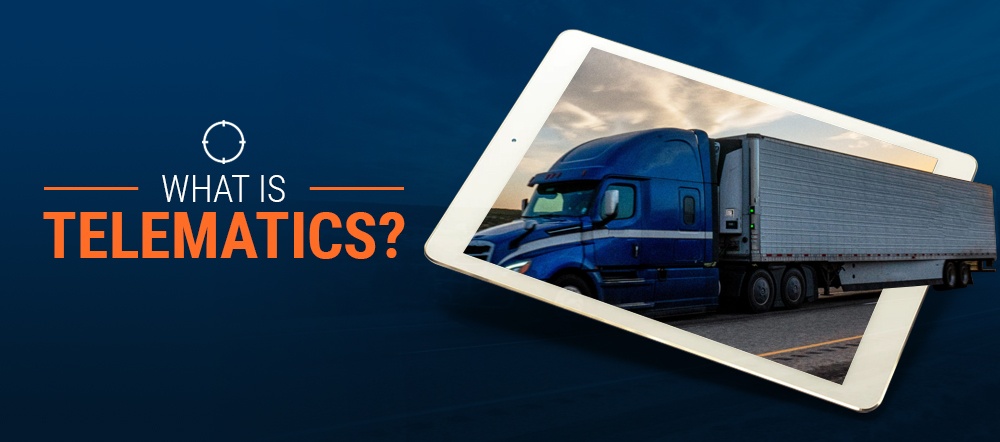
What is telematics? Telematics refers to the transmission of electronically collected information over a long distance from a relevant point of interest — such as a vehicle — to an end-user. Vehicle telematics is a method of monitoring and gathering the logistics of a vehicle or fleet.
Telematics technology utilizes computer systems that collect data in several key areas of operation, including driver location and behavior, fuel level and vehicle status, route tracking and more.
You may have even encountered telematics in your personal life. For example, telematics technology in cars can help auto insurance companies gather data and analyze your driving habits. Telematics technology is also behind many modern-day car features, like active weather alerts.
Over the years, telematics technology has evolved from basic GPS tracking to include advanced sensors, diagnostics, and communications. This has enabled expanded functionality that makes telematics critical for fleets of all sizes. It provides them with real-time visibility, full accountability, and data-driven decision-making. All of these can be powerful differentiators and enhance the competitive edge of virtually any type of fleet operations.
Several industries and vehicles can utilize tracking via telematics technology, including:
Whether you manage a few vehicles or an entire fleet, any company that regularly transports assets can benefit from using a telematics system.
GPS tracking and telematics are closely related, but they are not exactly the same. GPS tracking primarily helps determine a vehicle’s position, movement, speed, and route. This information gives fleet managers visibility into where vehicles are and where they have traveled.
Fleet telematics builds on GPS tracking by combining vehicle location information with additional operational data. Depending on the system, telematics data can include idling, acceleration, braking, mileage, engine information, and other vehicle activity. Instead of viewing location as an isolated data point, fleet managers can use telematics to develop a broader picture of how vehicles and drivers are performing.
This distinction is important for fleet management. GPS tracking answers questions about where vehicles are, while a telematics system can provide additional context about how those vehicles are being operated.
Depending on the features and settings you use, telematics technology works to collect, transfer and help you make sense of important data from the vehicles in your fleet.
Here’s how it works:
A fleet telematics system typically relies on several connected technologies. A GPS or telematics tracking device installed in the vehicle collects information, while GPS satellite positioning helps establish the vehicle location. A cellular or other wireless connection then transmits the information to the fleet management platform.
Cloud-based software organizes the incoming telematics data and makes it available to authorized users. Fleet managers can then access information through a computer, smartphone, tablet, or other compatible device.
Together, these components create a continuous flow of information between fleet vehicles and the people responsible for managing them. The specific hardware and capabilities can vary by system, but the goal is the same: give managers timely, useful information about fleet activity.
The data collected by the telematics varies, depending on the company you work with and the features you choose to track. Depending on your specific needs, you can filter which features you would like to manage, as well as which data is included in regular reports. Fleet managers and business owners can monitor things like:
Collecting telematics data is only part of the process. The greater value comes from using that information to identify patterns and make informed fleet management decisions.
For example, repeated periods of excessive idling can indicate opportunities to review routes or driver practices. Speeding, rapid acceleration, or frequent hard braking can help identify areas where targeted driver coaching may be useful. Mileage and route information can reveal unnecessary travel, while vehicle usage information can help managers plan maintenance around actual fleet activity.
Real-time vehicle location can also support day-to-day dispatching. Managers can identify which vehicle is best positioned for a new assignment, monitor unexpected stops, and provide customers with more accurate arrival information. By translating fleet telematics information into specific actions, managers can move beyond simply monitoring vehicles and use the data to support more efficient operations.
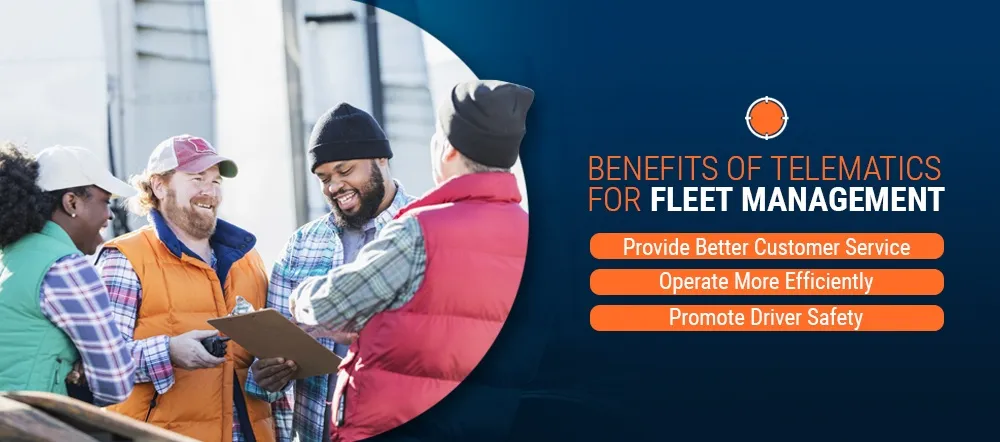
So, what kind of benefits can you expect when you implement a telematics solution into your operations? Some of the benefits of telematics systems include the ability to provide better customer service, operate more efficiently and promote driver safety:
1. Provide Better Customer Service
Offering quality customer service is an essential part of running your business. Occasional delays of arrival times are often unavoidable due to uncontrollable factors, such as road closures or inclement weather.
With a telematics monitoring system in place, you can provide your customers with better customer service by knowing where a customer’s crew is throughout the entire process and keeping them informed about any changes in status or anticipated arrival time. If your drivers are delivering a shipment, you can also verify that assets are delivered to the right location.
2. Operate More Efficiently
With the right telematics system, you can operate more efficiently and reduce the amount of time and money it takes to operate your business. Here are just a few examples of how telematics devices can improve your operations:
3. Promote Driver Safety
As a fleet manager, the safety and wellbeing of your drivers — as well as the people they share the road with — is a top priority. Telematics can help keep your team and your shipment safe and sound. Here are a few of the ways telematics encourages driver safety:
Visibility into the position of vehicles on the road is critical, but it’s far from the only way telematics delivers value for fleets. Thanks to a wide range of integrations that is always growing, fleet managers can leverage telematics to provide them with broader data sets that enable stronger decisioning.
For example, modern telematics systems offer integrations with maintenance planning software, giving teams the ability to plan predictive maintenance activities based on which vehicles are most likely to need them based on usage patterns. Connecting to dashcams and fuel cards also enables cross-referencing with driver behavior and fuel consumption patterns. This gives fleets insights they can use to curb unsafe or inefficient behaviors and reduce unnecessary fuel usage.
Although integrations provide added functionality to telematics systems, fleet managers must be careful about how they plan them. They need to make sure their platforms have API support to enable smooth communication between systems. Caution must also be employed to prevent data silos that result in disparate information and missing data points.
As with most forms of connected technology, there are some considerations fleet managers need to keep in mind with regard to privacy when using telematics. Some drivers may be uncomfortable with the idea of being watched remotely whenever they’re behind the wheel, and there is the potential for the data collected by these systems to be abused.
This is why it’s important to implement security controls such as role-based access, encryption, and limited data retention. These help cut down on the risk of data being misused and ensures only those who should have access to the information can make use of it. Fleet managers also must be aware that the role of telematics should be to improve the safety and efficiency of their operations. Using telematics as a surveillance tool to punish drivers is not only unethical but can hurt a carrier’s ability to recruit and retain employees.
Even as the technology reaches maturity, there’s still a lot of unrealized upside for telematics. Whether the technology ever reaches its true potential will come down to how well it can integrate with other emerging concepts. For example, AI can bolster the predictive analytics capabilities of telematics platforms, helping streamline the decision-making process based on trends without much need for human intervention or analysis. Assuming autonomous driving lives up to its promises, there’s a lot that telematics can do to support self-driving fleet vehicles.
On the other side of the coin, fleets must be aware that data privacy laws may continue to evolve to address whatever new capabilities are unlocked by these integrations. This means fleet managers need to be proactive in their compliance efforts to ensure they are not left behind.
The right fleet telematics system should match the way your organization operates. When comparing options, consider whether the system provides real-time vehicle location, customizable alerts, driver activity reporting, historical trip information, maintenance capabilities, and mobile access. Installation requirements and ongoing customer support are also important considerations.
Scalability matters as well. Fleet management needs can change as vehicles are added, routes evolve, or a business expands its services. A system that can accommodate these changes may make it easier to maintain consistent visibility as operations grow.
Rather than choosing a platform simply because it offers the longest feature list, identify the information your team actually needs to make decisions. The most useful telematics data is information that fleet managers can readily access, understand, and apply to everyday operations.
As one of the top telematics providers, Track Your Truck provides business owners and fleet managers with solutions that can help you maximize driver safety and productivity, reduce operational costs, streamline operations and provide your clientele with better customer service.
To learn more about what Track Your Truck telematics and GPS fleet management can do for your business, request a demo or a quote today.